Aerial Intelligence Operating System
Tesla VTOL Since 1927
Operating Software for all Drones
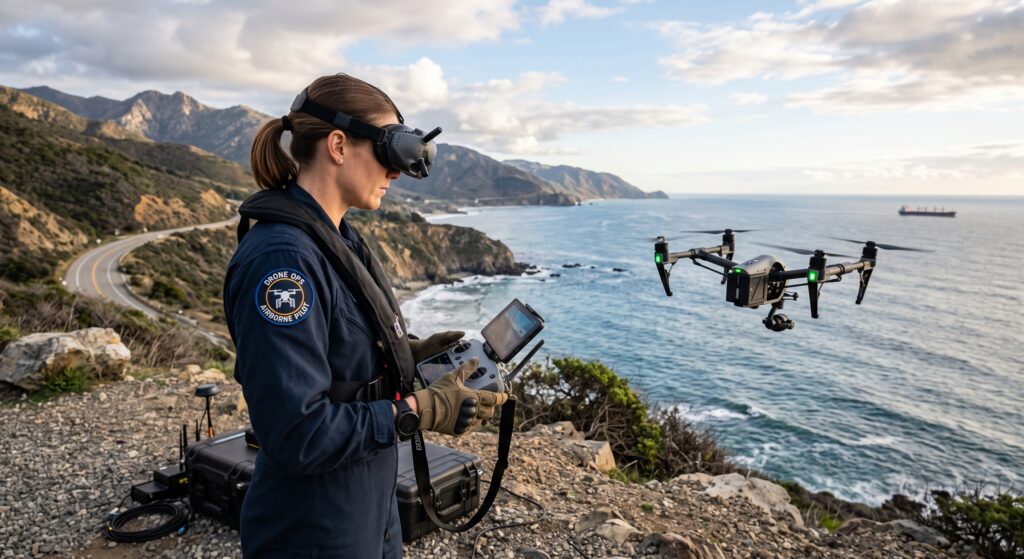
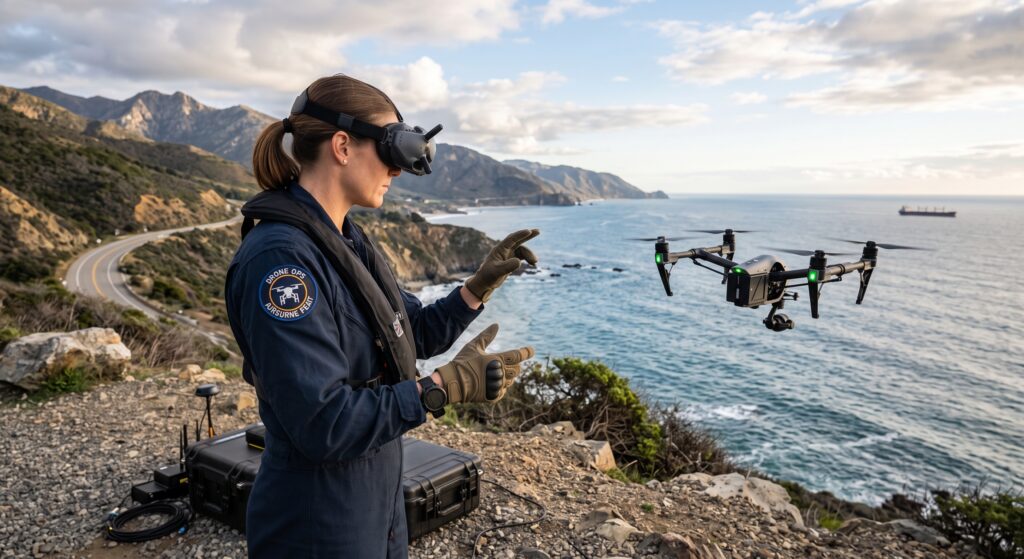
Commercial Drone Operations: Visual Line of Sight (VLOS) operations rely on a 1:1 model (one pilot controlling one aircraft).
Autonomous Programmatic Target-Directed Flight
AIOS Decision-Making Flight Operations
What is AIOS, and How Does it Work?
Aerial Robotics AIOS™ (Artificial Intelligence Operating System) is a 100% unmanned system designed to solve the challenge of a unified operating system for autonomous aviation and intelligent robotics. Built on Active Inference AI, AIOS serves as the intelligent software foundation that enables autonomous aircraft, drones, robotic systems, AI agents, sensors, and connected infrastructure to communicate, coordinate, learn, and execute complex missions within a single secure operating environment without human intervention.
Comerical Flight Operations
AIOS™ serves as the drone’s autonomous decision-making layer, managing the fundamental functions completing a mission without continuous human piloting.
AIOS™ is an Active Inference architecture to continuously compare what the drone expects to happen with what actually occurs. When conditions & obstacles, degraded GPS, communications that may change the mission the system can update its understanding & select a different action.
AIOS™ continuously interprets data from cameras, LiDAR, radar, GPS/GNSS, inertial sensors, evolving an understanding of the drone’s surroundings. Eliminates uncertainty assessing obstacles, changing conditions, and safe flight corridors as it operates.
AIOS™ continuously monitors the operational condition and available landing options. When a problem develops, the system is designed to determine an appropriate contingency response,
We have developed a revolutionary to map large areas at high resolution with cutting edge sensors. Using a trained pilot network, airspace integration experts, and cloud-based processing- we create a digital twin of the earth when we fly. We use this to prevent wildfires, grow better food, keep communities safe, and help rebuild after natural disasters
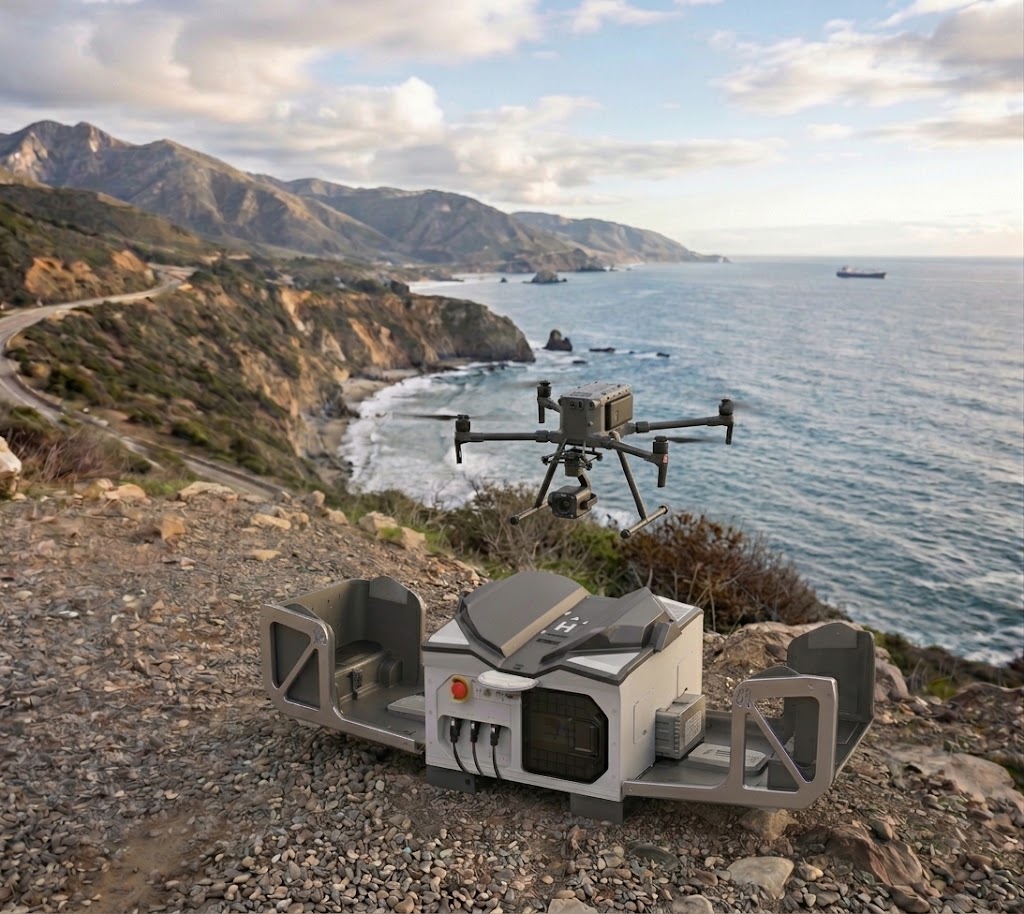
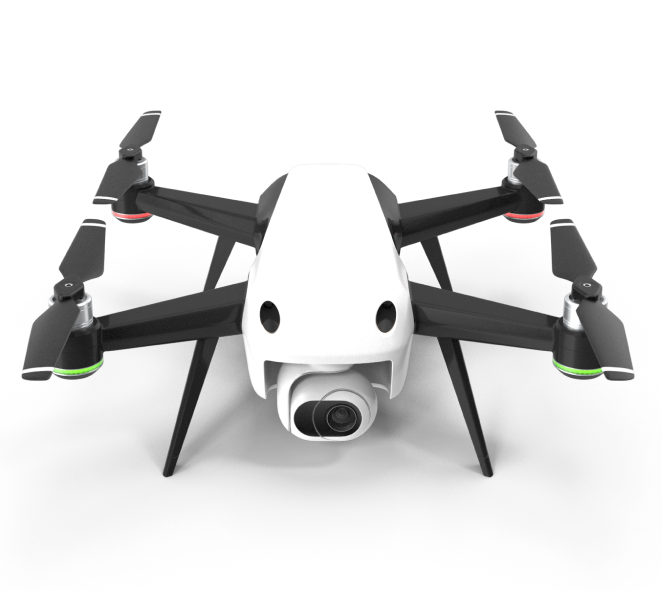
Utilizing Video cameras, Tesla Drones capture important data need for immediate decision making.
"Real Time"
With appropreate permissions important fire prevention, rodent management and soil analisys can be collected mapping an aera of less than 10 square ft.
Sensor Arrays provide continuous, timed or interrupted data
streaming to the cloud
or other storage.
Line of Site and Out of Site is
used when creating maps that typically are forced to use more expensive methods such-as low
flying light aircraft or satellites.
In a post-fire or recovery, AIOS™ serves as the unified orchestration software layer, coordinating autonomous drones, ground rovers, sensors, and field teams to accelerate safety assessments, risk mitigation, and rebuild operations without risking human lives in hazardous terrain.
To make the jump from maps being “pretty pictures” to powerful tools, we have to have a reliable and repeatable system of mapping. We continually work to make mapping more efficient, more powerful and provide the platform to help change the world.
Dr. Friston became a Fellow of the Royal Society of Biology in 2012, received the Weldon Memorial
Prize and Medal for contributions to mathematical biology
Dr. Karl Friston’s Free Energy Principle (FEP) and Active Inference framework provide the mathematical foundation for AIOS™, transforming UAS operations from rigid, reactive automated systems into truly self-governing, adaptive autonomous agents. Aerial Robotics translates Dr. Friston’s biological intelligence principles into real-time edge compute, AIOS delivers autonomous decision-making that outperforms traditional pilot-dependent control models in speed, safety, and mission efficiency.
Aerial Robotics translates Dr. Friston’s biological intelligence principles into real-time edge compute, AIOS delivers autonomous decision-making that outperforms traditional pilot-dependent control models in speed, safety, and mission efficiency.
Theoretical Core: Built on Dr. Karl Friston’s Active Inference and Free Energy Principle, AIOS minimizes operational uncertainty (sensory surprise) by unifying perception, learning, and real-time flight control into a single predictive model.
Edge-Native Decision Logic: Evaluates target priorities, sensor telemetry, and safety risks on-device, executing high-stakes flight actions without human-in-the-loop latency.
Spatial Domain Mobility Portal Overview
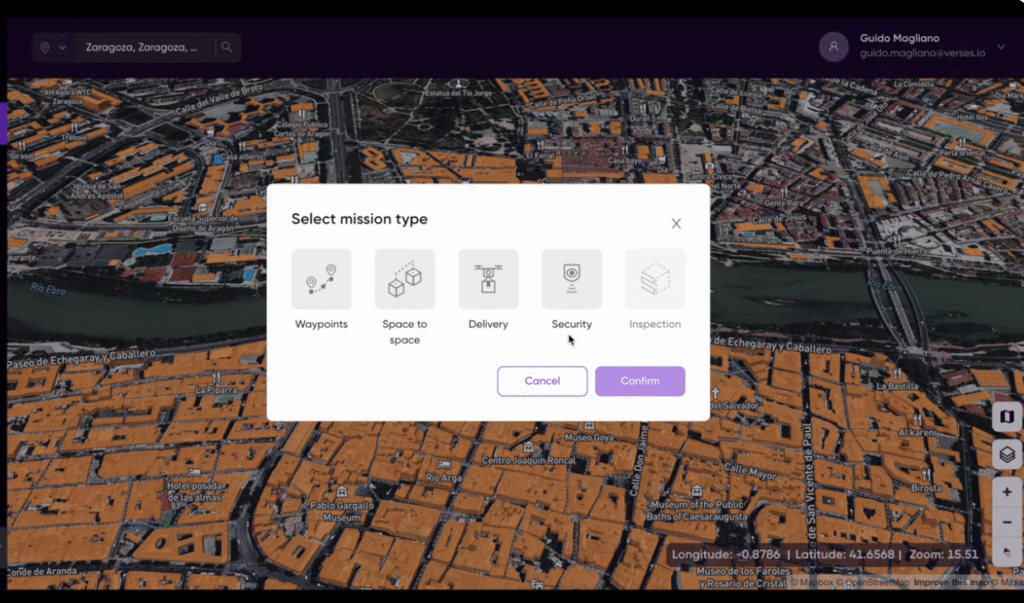
The video above demonstrates the Spatial Domain Registration Release 1.0 Portal is a centralized operating platform designed for multi-drone deployment autonomous missions planning, spatial governance, and fleet orchestration.
Core Platform Features Shown in the Video
Integration of Active Inference in the System
The Historical Vision: Tesla’s Tilt-Rotor / VTOL Precursor
Nikola Tesla laid the foundational conceptual blueprint for modern vertical-flight aircraft with his patent application filed in 1921 (granted in 1928 as U.S. Patent 1,655,114, “Apparatus for Aerial Transportation”).
The Core Mechanism: Tesla designed a “flivver” aircraft featuring a tilt-wing/tilt-rotor configuration that could take off vertically like a helicopter, transition its orientation horizontally for aerodynamic forward flight, and land vertically without a runway.
The Electric Vision: While initially engineered for lightweight turbine propulsion, Tesla consistently advocated for electric aviation powered by wireless energy transmission, anticipating today’s electrified urban air mobility (UAM) and eVTOL architectures by over a century.
Modern Relevance: Today’s autonomous eVTOLs, uncrewed logistics platforms, and tilt-rotor aircraft directly inherit Tesla’s vision of vertical spatial efficiency, high-speed cruise, and decentralized air infrastructure.
Utilizing legacy aerospace connections and visions of an innovative future, we fight problems from the air that have never been touched before.
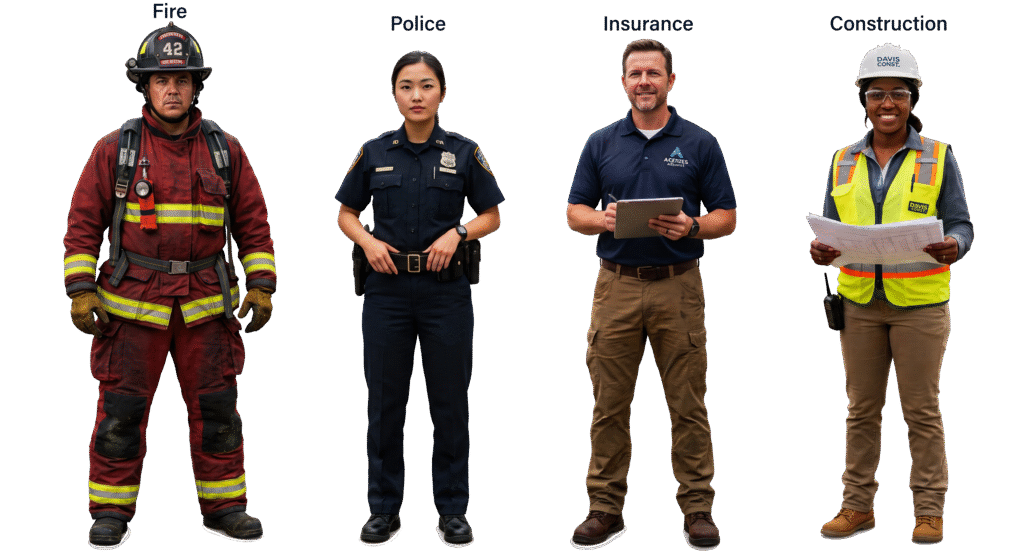
Overall, clients are finding drones to be a valuable tool in a variety of home-related applications, including building, inspections, surveys, security, and marketing. Drones provide a unique perspective and the ability to capture high-quality images and data, which can help clients save time and money, improve efficiency, and make informed decisions about their properties.
Work for you
Contact to map your locations
Copyright© 2026 AERIAL ROBOTICS, Inc.

Privacy Policy
Term & Services